
Articles - Your Health Magazine, November 2007
Sleep Apnea and Related Breathing Disorders
The Dentist's Role In Management & Treatment
Obstructive sleep apnea, usually characterized by severe snoring is now recognized as a life threatening disorder associated with higher rates of stroke and heart attack and accidents that are often associated with excessive sleepiness while driving motor vehicles. It also affects mental acuity and alertness and temperament leading to work impairment and social strife.
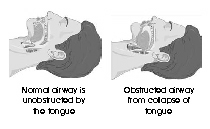
Yet obstructive sleep apnea is often not diagnosed and, even when diagnosed, is often untreated or ineffectively or inappropriately treated. It is caused by the collapse and/or narrowing of the upper airway associated with sleep related breathing disorders.
Prevalence
It is estimated that more than 12 million Americans have obstructive sleep apnea. Sleep apnea is more common in men. One out of 25 middle-aged men and one out of 50 middle-aged women have sleep apnea. Impaired breathing and the incidence of obstructive sleep apnea increase with age.
Oral Appliance Therapy for Obstructive Sleep Apnea
Oral appliance therapy (OAT), when appropriately practiced, provides a more predictable success rate than surgery, is reversible and considered more user friendly than blowing air down the throat through nasal CPAP treatment.
It is a non-surgical approach to management of tongue position. It prevents the base of the tongue from collapsing and obstructing the upper airway. Oral appliances may function in three basic ways: (1) by repositioning the mandible (lower jaw), tongue, and hyoid bone; (2) by stabilizing them; and (3) by increasing baseline genioglossus (tongue) muscle activity.
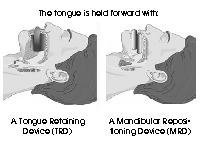
There are two types of oral appliances that have demonstrated effectiveness in the treatment of obstructive sleep apnea: tongue retaining devices (TRD) and mandibular repositioning devices (MRD). Of these, the MRDs are most numerous and have more design variations.
The challenge of oral appliance therapy is eliminating or significantly reducing snoring. Successes depend on matching the most appropriate appliances and method of use to each individual patient.
Oral Systemic Balance
The new generation of oral appliance therapy, Oral Systemic Balance® (OSB) Therapeutic Systems, were developed by Farand C. Robson, DDS. OSB focuses on restoration of impaired oral function which primarily impacts speaking, swallowing and breathing both while awake and asleep. The observed results of OSB appear to have more profound and far reaching affects than traditional OAT that is limited to the treatment of “obstructive” sleep disordered breathing. Even here OSB appears to surpass traditional OAT.
Consult with your dentist about which treatment may be best for you.